ServicesWater Softeners
Water Softeners in Prosper, Installed the Safe Way
Hard water shows up as chalky rings around the faucet, a cloudy film on your glassware and mineral buildup in the water heater. We check your hardness, size a softener to your home, then install it with a bypass valve, a proper drain and a walkthrough before we leave.
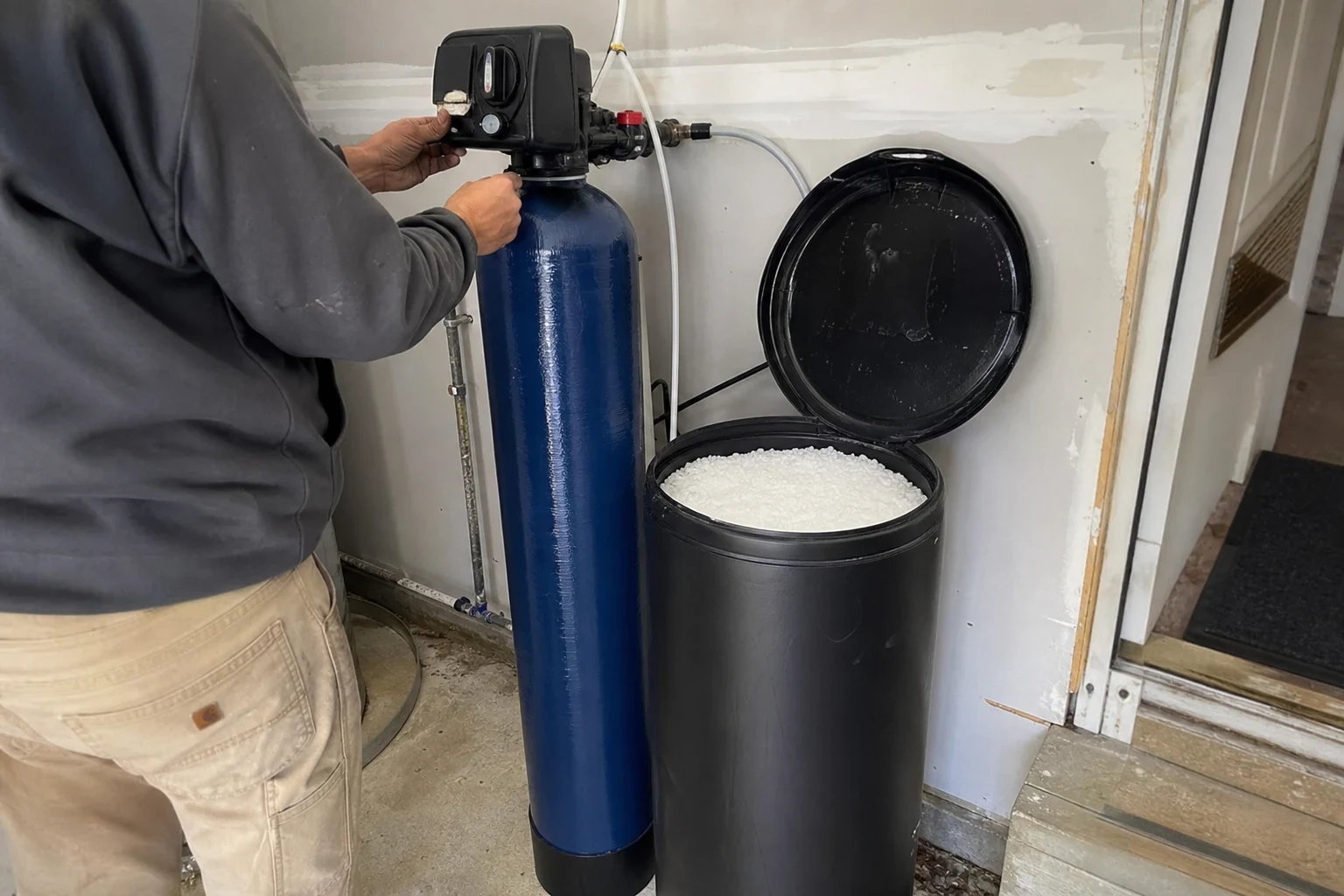
Hard Water and How a Softener Handles It
Hardness comes from calcium and magnesium dissolved in your water. The main tank of a softener holds a bed of tiny resin beads. Water flows past them, the beads grab those minerals and release sodium in their place, or potassium if you prefer it. Every so often the unit rinses the beads with salty water from the brine tank, and that rinse goes down the drain.
Scale is the job a softener is built for: crusty fixtures, cloudy dishes, a water heater that pops and rumbles. It will not touch chlorine taste or smell. If that is your main complaint, whole-home filtration is the better fit, and we will tell you so. We check your hardness before we size anything, so the unit on your quote matches your water and not a guess.
What Your Softener Install Includes
Sizing from your numbers
We match grain capacity to your hardness reading and how much water your home uses. Too small and it runs out between cycles. Too big and the resin can sit idle and wear unevenly.
A bypass valve you can reach
Every system gets a bypass. You can take the softener out of the line in seconds and still have water in the house if anything ever needs service.
A drain line with an air gap
The brine wash has to leave the house with no chance of dirty water backing up into the softener. We run the drain with a proper air gap so that cannot happen.
Grounding kept intact
Cutting into metal pipe can break the electrical ground some homes rely on. Where that applies, we add a grounding jumper across the softener so the path stays continuous.
Setup and a short lesson
We program regeneration to your hardness and schedule, fill the salt tank and show you the bypass and how to read the salt level.
Signs Your Home Could Use a Softener
White crust on fixtures
Chalky buildup around faucets and showerheads that comes back a week after you scrub it is mineral scale.
Spots on glasses and shower doors
Dishes come out hazy and glass dries with a white film, even with rinse aid.
A noisy water heater
Popping or rumbling usually means minerals have settled on the tank floor. The burner has to heat through that layer, which wastes energy and wears the tank out sooner.
Lather that goes flat
Shampoo and dish soap struggle in hard water. You end up using more, and skin can feel tight after a shower.
Slow showerheads and clogged aerators
Scale narrows small openings first. Weak flow at one fixture is often an early warning for the rest of the plumbing.
How the Job Goes
- 1
Phone call and hardness check
Give us a ring and describe the trouble spots around your home. We book a visit to check your hardness and look at where the unit would sit.
- 2
Written quote
You get a quote that lists the unit, the parts and the labor. If your water does not need softening, we say that plainly.
- 3
Install day
We shut off the main, bleed off the pressure and lay down drop cloths. Then we cut in the softener with its bypass, run the drain with an air gap and keep the electrical ground continuous with a jumper where the pipe calls for it.
- 4
Flush, test and clean up
We fill and flush the system, check every joint for leaks and set the controls. Then we haul off packaging and old parts and leave the space as we found it.
What Moves the Price
Softener cost comes down to your water, your home and the equipment you choose. We list each part on the quote so you can see where the money goes. Standard professional installation included for qualifying homes.
- Hardness and how many live there
- The higher the reading and the bigger the family, the more grain capacity the unit needs. Larger tanks cost more.
- Where it goes
- If your home already has a softener loop, usually in the garage, the install is simpler. No loop means new plumbing to reach the main line.
- Metered or timer head
- A metered head counts the gallons your home goes through and only recharges the resin when it is needed, so it burns less salt and water. A timer head recharges on a fixed calendar and is cheaper to buy.
- Extras that protect the system
- A sediment prefilter, a new drain run or a fresh outlet nearby all add to the job when your setup needs them.
Water Softener Questions
Something not covered here? (972) 351-8085
Does softened water add sodium to what I drink?
Yes, a small amount, and it rises with harder water. For most people it is minor. If someone in your home watches their sodium, you can run potassium instead of salt, or add reverse osmosis at the kitchen sink for drinking and cooking water.
Will a softener get rid of chlorine taste?
No. Softening only deals with the minerals that leave scale behind. Chlorine is a job for the carbon media in whole-home filtration. Plenty of homes run both, with the filter set ahead of the softener on the main line.
How often does the salt need topping off?
Lift the brine tank lid about once a month and add salt when it drops below half full. A metered valve goes through less salt, since it only regenerates after you have used enough water to need it.
Is the brine tank safe with kids and pets around?
Keep the lid closed and the tank where little ones cannot climb on it. Store salt bags off the floor and lift them with care, since they are heavy. We place the tank with that in mind on install day.
What if I need to turn it off?
Use the bypass valve. We show you where it is and how to work it before we leave. Water keeps flowing through the house while the softener sits out of the line.
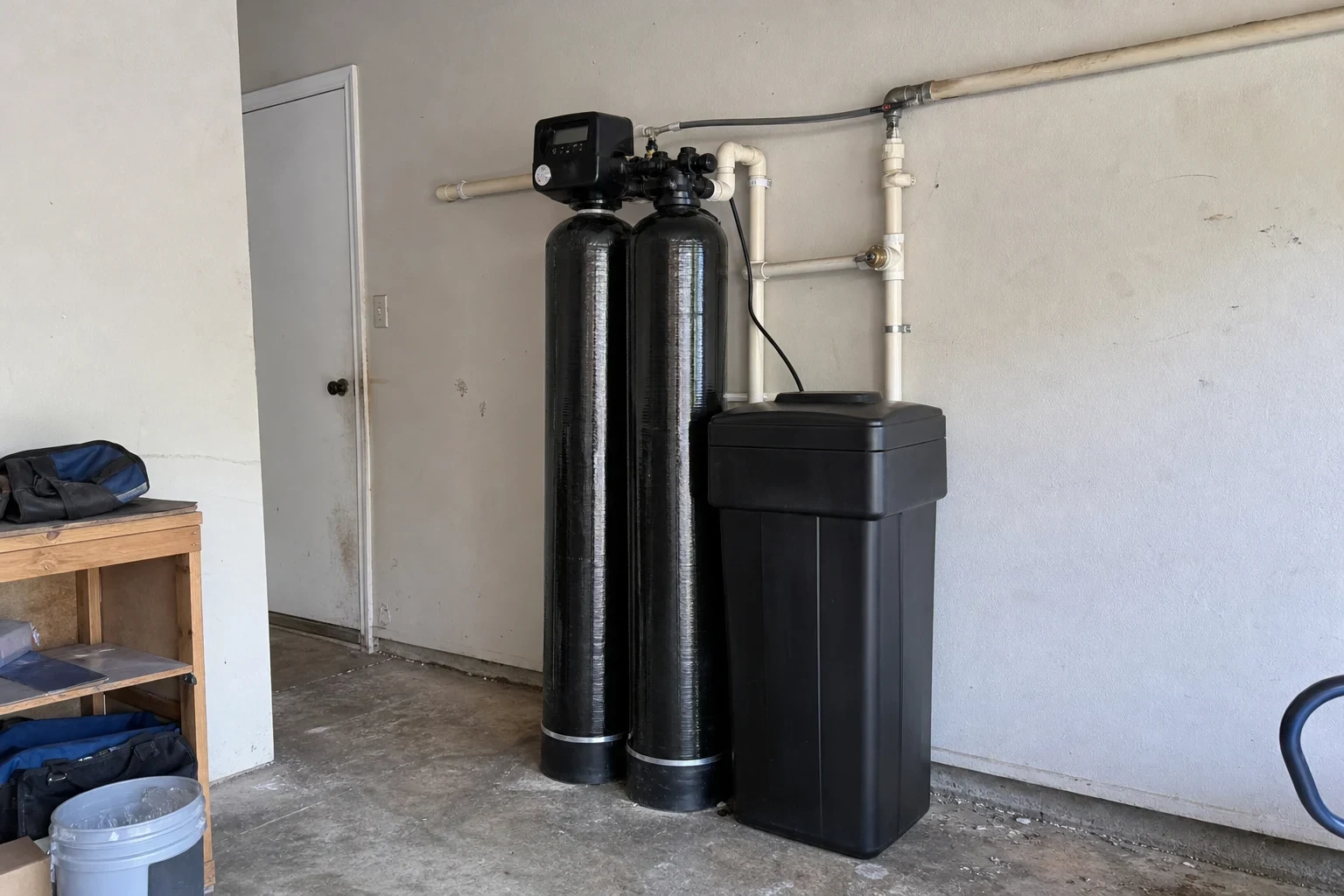
Ready to Get Rid of the Scale
Describe the spots and crust you are dealing with. We will check your water and walk you through a quote with every line spelled out.